
Are you planning a trip to Corsica and wondering if the island is safe?
Good news: thefts targeting visitors are rare there. The real risks lie elsewhere—at the beach, in the mountains, around fire, and on the road.
Here are all the details to answer your question: Is Corsica safe?
With all our tips for stress-free travel.
This guide is completely independent, based on our experiences. We visited the region anonymously, making our own choices and paying our bills in full.
Is Corsica safe? Quick response
Yes, Corsica is a safe destination. Street crime is lower there than on the French mainland, and tourists are rarely targeted.
The risks to be aware of are mainly natural: rip currents at certain beaches, challenging mountain trails, forest fires and thunderstorms in the summer, and winding roads where animals roam freely.

Corsica is a French island located in the Mediterranean Sea, between mainland France and Italy. French laws apply there, and the island is part of the European Union and the Schengen Area.
Our approach: In Corsica, nature sets the rules
Throughout our stays on the island, whether in the spring or in the height of summer, we never felt unsafe in town or in the villages. The moments when we had to be extra careful were all related to the environment: a sea that was rougher than expected, a thunderstorm that broke out late in the day in the mountains, a cow appearing around a bend.
That is why the risks listed below are ranked according to their actual likelihood for a traveler, rather than according to what makes the headlines.

WHERE TO STAY IN Corsica
Best Places
Our Picks for the Best Hotels
- The most beautiful hotels in Corsica
- The best luxury hotels
- Hotels by the sea
- Boutique Hotels in Southern Corsica
Our recommendations, if you’ve already chosen your city:

What to do in an emergency Useful Phone Numbers
112 is the European emergency number. It works from any phone, and operators can respond in multiple languages.
You can also dial these French numbers: 15 for SAMU (medical emergencies), 17 for the police or gendarmerie, and 18 for the fire department.
At sea, dialing 196 connects you directly to the Maritime Rescue Coordination Center (CROSS).
The island’s two main hospitals are located in Ajaccio and Bastia, supplemented by smaller facilities in other cities. In the mountains, rescue teams often use helicopters, so make sure your phone is charged.
Risk No. 1: The Ocean and Beaches

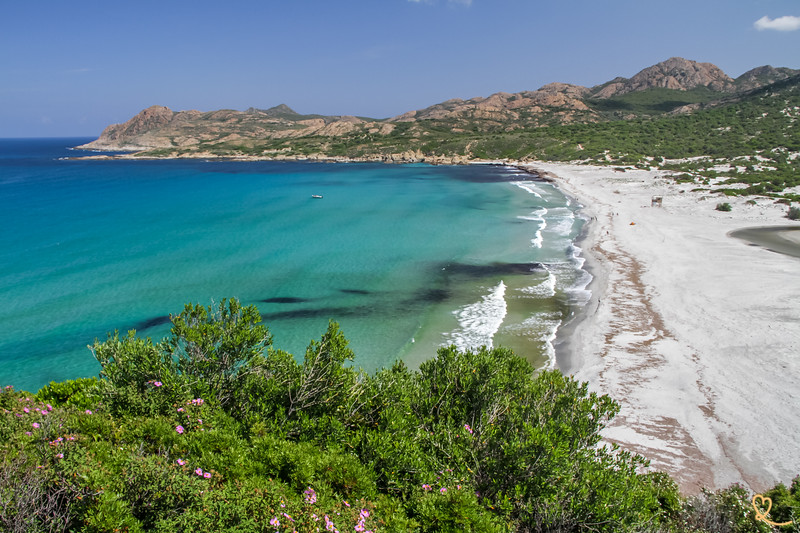
The turquoise waters off the Corsican beaches immediately make you want to take a dip. However, many of them are not monitored, especially outside of July and August.
On the west coast, which is more exposed to the wind, waves and currents can intensify within a few hours. The east coast is often calmer when the wind blows from the west.

We always check the swimming flag when there is one: green means supervised swimming with no particular danger, yellow means supervised swimming but dangerous, and red means swimming is prohibited.
On beaches without lifeguard stations, we avoid swimming alone or going far from the shore, even when the water looks calm.
Also, watch out for the rocks at the water’s edge—they can be slippery and sometimes sharp.
Jellyfish
Some summers, schools of jellyfish drift close to the coast, particularly the pelagic jellyfish, which can be recognized by its mauve color. Its sting is painful but rarely serious.
Lifeguards and beach vendors usually let people know they’re there: check with them before you go swimming.
Advice:
- Choose supervised beaches if you’re traveling with your family
- Wear water shoes on rocky beaches
- Do not swim alone, and stay close to the shore when the sea is rough.
Swimming in rivers: Watch out for flash floods

Swimming in the pools of the Solenzara or Restonica Gorges is one of the joys of summer in Corsica. The water there stays cool, even in August, and the bottom isn’t always visible.
Never jump without checking the depth first. Also, avoid swimming after a thunderstorm: a river’s water level can rise very quickly, even if the sky is clear where you are.
OUR TIPS FOR RENTING A CAR IN Corsica
- Compare prices on our preferred platform: DiscoverCars – one of the best rated sites.
- Choose a car that is powerful enough (the roads are steep) but compact (some passages are narrow).
- Remember to take outcomprehensive insurance (some roads are winding and narrow).
- There is a lot of demand, book it early.
Hiking: Challenging Trails

Corsica is a mountainous island: its highest point, Monte Cinto, rises to 2,706 meters. There are many trails, but many of them climb steeply and cross rocky terrain.
The GR20, which crosses the island from north to south for about 180 km, is one of the most challenging long-distance hiking trails in Europe. It requires good physical fitness, mountain experience, and appropriate gear.
In 2015, a rockslide claimed the lives of seven hikers in the Cirque de la Solitude. This passage has since been replaced by a different version.

For day hikes, we set out early in the morning and bring at least 2 liters of water per person. We also always let someone know our itinerary.
The times shown on the signs are based on experienced hikers: be sure to allow extra time. Even the so-called “easy” coastal trails, such as the Sentier des Douaniers, have steep climbs and little shade.
Cliffs and Viewpoints

Around Bonifacio, the limestone cliffs are spectacular, but many of the lookout points lack guardrails. This is the case on the trail to Cap de Pertusato or at Saint-Antoine Beach, where eroded rock has formed deep holes. Keep children close to you and stay away from the edge.
Advice:
- Wear proper walking shoes, even for a short walk
- Check the mountain weather forecast before you leave; it’s often different from the coastal forecast
- Check with the Corsica Regional Nature Park before going on a high-mountain hike
- Turn back if the sky clouds over on the ridges
Forest Fires: The Main Risk This Summer

Every summer, drought and wind make the scrubland highly flammable. To prevent wildfires, a prefectural order prohibits smoking and open fires in natural areas, generally from June 15 to September 30. Impromptu barbecues in the great outdoors are therefore prohibited.
When the risk becomes very severe, the prefecture may prohibit access to certain mountain ranges for the day, such as the Fango, the Bonifatu Forest, the Agriates Desert, or Bavella. A fire risk map is published every evening for the following day. When the risk is severe, it is recommended that you leave the mountains before 11 a.m.
In the summer and in October, check this map the day before each hike.
If you see smoke, move away in the direction opposite to the wind and dial 18 or 112.
Late-Summer Thunderstorms and Storms

Corsica often experiences thunderstorms in the late afternoon, especially in the mountains and toward the end of summer. They are usually brief, but they can bring hail, strong gusts, and flash floods in the valleys.
Advice:
- Check the Météo-France weather alert map (yellow, orange, red) every morning
- Plan your mountain activities for the morning, since thunderstorms usually break out in the afternoon
- If an alert is issued, stay away from trees and ridges
- If you are staying at a campground, follow the evacuation instructions given by the staff
- See also : Things to Do in Corsica When It Rains
OUR TIPS FOR RENTING A CAR IN Corsica
- Compare prices on our preferred platform: DiscoverCars – one of the best rated sites.
- Choose a car that is powerful enough (the roads are steep) but compact (some passages are narrow).
- Remember to take outcomprehensive insurance (some roads are winding and narrow).
- There is a lot of demand, book it early.
Sun and warmth

In July and August, daytime temperatures regularly exceed 30°C along the coast, and most beaches offer no shade. The Mediterranean sun burns quickly, even at high altitudes or under a slightly overcast sky.
If you’re worried about the heat, check out our article on when to visit Corsica.
Advice:
- Apply sunscreen every 2 hours and after each time you go swimming
- Bring a hat, sunglasses, and a beach umbrella for the beach
- Drink regularly, even if you don’t feel thirsty
- Avoid hiking on exposed trails between noon and 4 p.m.
Is it dangerous to drive in Corsica?

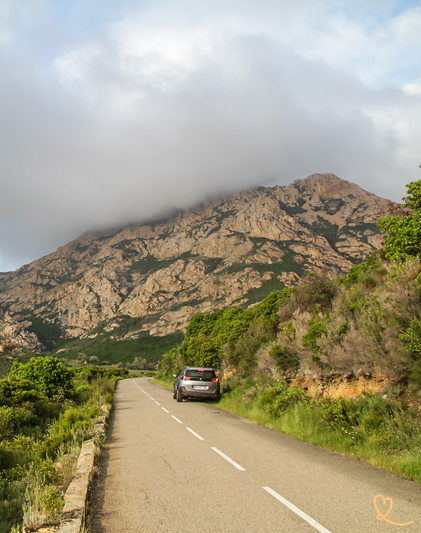
Not really, as long as you take your time. Most of the roads are in good condition, but they have only one lane in each direction and consist of a series of curves. The island has neither highways nor tolls, so travel times are longer than the distance would suggest.
Some sections require extra concentration: the road through the calanques de Piana and the west coast of Cap Corse. We recommend taking these routes early in the morning, before the tour buses arrive.
In the villages, we were surprised by the number of speed bumps installed to enforce the 30 km/h speed limit.
Watch out for animals on the road

The main danger on Corsican roads remains animals roaming freely. Cows, pigs, goats, or donkeys may suddenly appear around a bend, even on major roads. Slow down in grazing areas and be extra careful at night.
If you’re renting a car, choose a compact model with an engine powerful enough to handle the hills. We compare offers on Discovercars.
Check out all our tips in our guide to driving in Corsica.

HOW TO GET TO Corsica
Departure from France and Italy
- See all ferry options in our article
- Compare schedules, prices and availability directly
Advantage: you can take your car!

Airports in Bastia, to visit the North, Figari to visit the South, or Ajaccio convenient for all Corsica.
Compare flights!
Theft and Crime: A Low Risk

Street crime is not very common in Corsica. Non-violent thefts targeting individuals are significantly less common there than in mainland France, and visitors are rarely targeted.
The risks mainly involve items left in plain sight in cars parked in beach parking lots or at the starting points of hiking trails. In the summer, pickpocketing can also occur in crowded areas, such as the narrow streets of citadels or ports, just as it does in any tourist destination.
Advice:
- Don’t leave anything in plain sight in the car, even if you’re only stopping for a few minutes
- Keep your bag and phone close to you when you’re in a crowd
- Choose accommodations that have parking or a safe if you’re traveling with valuable equipment
Understanding the Local Context

You may come across news articles about gangland killings or terrorist attacks in Corsica. These incidents do occur, but they are related to organized crime or political demands. They target specific people or property—usually at night—rather than travelers.
In fact, a segment of the population advocates for greater autonomy for the island as well as the use of the Corsican language, a Romance language closely related to Italian.
Along the way, for example, you’ll see signs where the French name has been painted over, leaving only the Corsican name (Aiacciu for Ajaccio). The two shapes are similar, which does not interfere with orientation.
As for us, we’ve always been well received. Corsicans are very attached to their island and their culture: a simple “Salute” (hello) or a question about a local specialty often gets the conversation started.
We also recommend that you respect private property and follow the guidelines posted at the entrance to natural sites; this is a gesture of consideration that is greatly appreciated by those on site.
Traveling Alone in Corsica as a Woman
Corsica is a great destination for women traveling alone. We didn’t encounter any particular difficulties in the towns or villages, including in the evenings in Ajaccio or Bastia. The precautions are the same as anywhere else: stay alert at summer festivals and let someone know your hiking route.
For the GR20 or remote trails, we recommend joining a group or staying in a mountain hut, where you’ll run into other hikers.
Snakes, insects, and other small creatures
There are no truly dangerous animals in Corsica, and the island’s few snakes are not venomous.
The tiger mosquito is active in the summer, especially near wetlands: be sure to bring insect repellent for the evenings. When hiking, ticks can latch onto you in tall grass, so be sure to check yourself when you return.
Is it safe to drink tap water in Corsica?

Yes. Tap water is safe to drink unless otherwise indicated, and much of it comes from the island’s mountains. In fact, she often has good taste.
During very dry summers, however, some municipalities ask residents to limit their water use. Follow these instructions to avoid cuts.
When is the best time to go for a more relaxing vacation?
May, June, and late September offer a good balance: fewer people on the roads, moderate temperatures, and a generally lower risk of wildfires than in the height of summer. On the other hand, the sea is cooler in May, and thunderstorms become more frequent starting in the fall.
For more details, see our article on when to visit Corsica.
Safety in Corsican Cities
Is Ajaccio safe?

Ajaccio, the island’s largest city, is safe for visitors. The historic district and the harbor are easy to explore on foot, both during the day and in the evening. Just keep an eye on your belongings at markets and during major summer festivals.
See the attractions in Ajaccio.
Is Bastia safe?

Bastia is a lively city where you feel right at home. The Old Port and the citadel are easy to visit. As in any port city, take the usual precautions around the ferry terminal during ferry arrival times.
See the attractions in Bastia.
Is Bonifacio safe?

Bonifacio is safe, but very crowded in the summer. The narrow streets of the citadel and the waterfront are then packed with people, which makes it easier for pickpockets to strike. The main risk, however, remains natural: the cliffs, which often lack guardrails.
See the attractions in Bonifacio.
Is Porto-Vecchio safe?

Porto-Vecchio is safe for tourists. In the summer, the old town and its bars draw large crowds in the evening: keep an eye on your belongings. When parking at nearby beaches, do not leave anything in your car.
See the attractions in Porto-Vecchio.
Is Calvi safe?

Calvi is a small, quiet town. Visitor numbers increase in July, especially during the Calvi on the Rocks festival: the town fills up and accommodations book up quickly. In the citadel, the old cobblestones can get slippery, so be sure to wear sturdy shoes.
See the attractions in Calvi.
PLAN YOUR TRIP TO Corsica
Inspiration destinations

Best of
- The most beautiful beaches of Corsica
- The most beautiful villages of Corsica
- The most beautiful cities of Corsica
- The most beautiful destinations in Corsica
- The museums of Corsica
- Hidden gems in Corsica
- The most beautiful natural pools
- What to do in North Corsica
- Best things to do in South Corsica
- Canyoning in Corsica
Where to stay