
The prehistoric site of Filitosa in southern Corsica is one of the most important prehistoric sites in the Mediterranean. We were struck by this unusual place, where 3,000-year-old statue-menhirs watch over the valley.
In this article, you’ll find our photos and tips for making the most of your visit to the archaeological site of Filitosa.

This guide is completely independent, based on our experiences. We visited the region anonymously, making our own choices and paying our bills in full.
Why visit the Filitosa prehistoric site?
Is Filitosa worth the effort? Our opinion:
Absolutely! The archaeological site of Filitosa is a must for anyone interested in prehistory and ancient civilizations. Its statue-menhirs, the only ones of their kind in the world, bear witness to remarkable craftsmanship and spirituality.
We were struck by the quality of the site’s conservation and the singular atmosphere it exudes, in the heart of an unspoilt Corsican landscape.
It’s one of South Corsica’s top attractions and one of the best archaeological sites in Corsica.

What makes Filitosa such a famous archaeological site?
Filitosa is famous for housing one of the finest collections of statue-menhirs in the world. These anthropomorphic granite figures, some armed and helmeted, are the remains of a Torrean civilization that occupied Corsica between 3500 and 1000 BC. The site is one of the most significant megalithic complexes in the entire western Mediterranean.

Our favorite moments
Here are our top 3 highlights from our visit to Filitosa:
- The discovery of statue-menhirs in situ, set in Mediterranean vegetation, some of which still bear representations of weapons engraved with disturbing precision.
- The 1.5km outdoor trail reveals the wild beauty of the Taravo valley.
- A visit to the Museum of Corsican Megalitism, which brings together the finest pieces from the site and provides a valuable historical context for understanding Torrean civilization.
WHERE TO STAY IN South Corsica
Our favorites: neighborhoods and hotels
Option 1: Bonifacio and its historic atmosphere
Hotel Cala di Greco overlooking the citadel! – Check photos and availability
See our selection of hotels.
Option 2: Around Porto-Vecchio, with your feet in the water
Hotel Mariosa with beach, pool, restaurant…
– Check photos and availability
See our selection of hotels.


Access and map: Filitosa, Solladaro, South Corsica
Where is Filitosa?
- In the commune of Sollacaro (20140), South Corsica (2A)
- In the Taravo valley, at Filitosa, D-57
- Driving time from Propriano: about 30min
- Driving time from Ajaccio: about 1h15
- Driving time from Porto-Vecchio: approx. 1h45
- Here is a map to help you find your way:

How to get there?
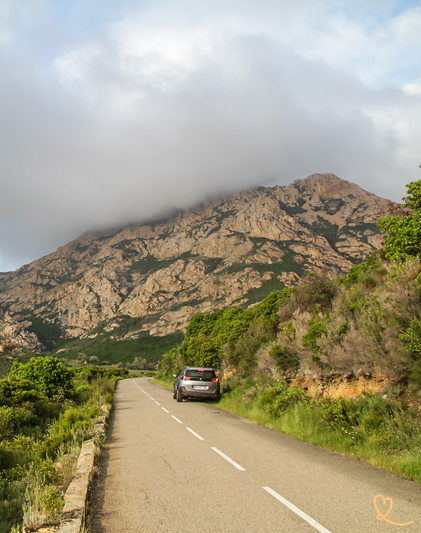
The car remains the most practical means of reaching Filitosa, as the site is located in a rural area with few services.
From Ajaccio or the port of Ajaccio, take the Nationale 196 towards Bonifacio as far as the Col de Celaccia, then turn right onto the Départementale 57 towards the coast, following the signs for Sollacaro.
From Propriano, Figari or Porto-Vecchio, take the N196 towards Ajaccio and, after Propriano, turn left onto the D57.
A bus service links Ajaccio to Porto-Vecchio, with a stop at Propriano, from where a vehicle is still required to reach the site.

Parking
Parking is available close to the site entrance. It’s a short walk from the parking lot to the ticket office.
OUR TIPS FOR RENTING A CAR IN Corsica
- Compare prices on our preferred platform: DiscoverCars – one of the best rated sites.
- Choose a car that is powerful enough (the roads are steep) but compact (some passages are narrow).
- Remember to take outcomprehensive insurance (some roads are winding and narrow).
- There is a lot of demand, book it early.
Useful tips: duration, schedules, eating…
Best time to visit
The site is only open from April 1 to November 2 inclusive. To get the most out of your visit, opt for spring (April, May, June) or early autumn (September, October). This way, you can avoid the intense heat of July and August and the summer crowds.
If you arrive when the park opens at 9am, you’ll benefit from morning light that’s ideal for photographing the statue-menhirs, and you’ll be able to stroll around in appreciable peace and quiet.

Length of visit and main difficulties
Allow around 1h15 for a complete tour of the site and museum.
The outdoor course is approximately 1.5km long. It takes place largely in the open air, on sometimes uneven natural paths: wear comfortable walking shoes.
The site extends over hilly terrain with stone steps, which can be a challenge for people with reduced mobility.
Clean, leashed dogs are welcome.

Advice on how to visit
We recommend you start at the Musée du Mégalitisme Corse (Corsican Megalithic Museum) to familiarize yourself with the history of the site, before exploring the remains outdoors.
You’ll then have plenty of time to follow the signposted route that winds its way between the statue-menhirs, the Torre Torréenne and the site’s various monuments. The direction of visit is indicated on site.
Take the time to stop at each explanatory panel: they shed valuable light on each architectural or sculptural element.


Visiting with children
The Filitosa site is ideal for families. With the purchase of a paper guide on site, families have access to a treasure hunt-type game that allows children to explore the site in a fun and educational way.
Younger visitors will love the life-size statue-menhirs, these stone giants that fire the imagination. Children under 6 enter free of charge.

Schedules and rates
- The archaeological site and the Museum of Corsican Megalitism are open every day from April 1 to November 2 inclusive, from 9 a.m. to 1 a.m. before sunset.
- The museum is open from 9am to 7pm.
- Prices are as follows: €9 (normal price, adults aged 18 and over), €7 (reduced price: disabled people and children/young people aged 6 to 17), €28 (family price: 2 adults and 2 children aged 6 to 17), free for children under 6.
- Tickets are on sale directly on site.
- Visit the official website for more info here.
Catering
A brasserie is open next to the site entrance, with an indoor room and outdoor terrace. Table service and takeaway.


It’s time to book!
Compare everything: companies, prices, schedules and availability.
The statue-menhirs, the heart of the site
The statue-menhirs of Filitosa are undoubtedly the highlight of the visit. These local granite figures, carved between 1800 and 1500 BC, depict warriors with weapons engraved with astonishing precision: swords, daggers and helmets are carved into the stone with a realism that commands respect. Some statues reach over 2m in height.

We were particularly struck by the level of detail in these works, which testify to a remarkable technical mastery for their time. Set amidst Mediterranean vegetation and thousand-year-old olive trees, they exude a striking presence. Stop for a long moment in front of each one: the engraved details reveal themselves as the light plays on the surface of the stone.
The Torre and Torrean monuments
At the heart of the site stands the Torre, an imposing circular construction of granite blocks erected by the Torreans around 1500-1000 BC. This people, who arrived in Corsica from the eastern Mediterranean, left a lasting imprint on the Filitosa landscape by building several monuments of this type, characteristic of their civilization. What makes their presence on this site particularly fascinating is their practice of re-using the statue-menhirs of previous cultures as simple building materials.
You can see for yourself fragments of statues integrated into the walls of the Torre, a superimposition of cultures that questions as much as it intrigues. We found this aspect of the site particularly evocative: it provides a concrete illustration of the succession and tensions between civilizations that have shared the same territory for centuries. And how everything is built around nature and previous constructions.

The Corsican Megalitism Museum
Located at the entrance to the site, the Museum of Corsican Megalitism brings together the most remarkable archaeological finds unearthed during the excavations. It’s an essential introduction before exploring the site outdoors. We found a clear, well-documented presentation of the site’s chronology, tools, ceramics and several of the best-preserved statue-menhirs.

Take the opportunity to immerse yourself in the historical context and the various archaeological theories that still surround Filitosa: some questions remain unanswered, adding a mysterious dimension to the visit.
The natural setting of the Taravo Valley
In addition to its archaeological treasures, Filitosa also seduced us with its exceptional natural setting. The site lies in the Taravo valley, in the heart of a Corsican maquis landscape dotted with ancient olive trees, some of which are estimated to be over 1,000 years old. Mediterranean vegetation is dense and fragrant, especially in spring.

We liked the way the site blends harmoniously into the landscape, with no break between the human heritage and the surrounding nature.
You’ll discover not only archaeology, but also geology, with its fascinating rock formations. Panels explain, for example, the cavities formed by erosion known as Tafonu.

Near some of the mehnirs you can also admire a magnificent olive tree. Its age is estimated at 1,200 years. It is classified as a “Remarkable Tree of France”. Here’s a photo:

History in brief
The Filitosa site is the focus of several millennia of human history in Corsica. Here are the main stages:
- Around 3500 BC: The first Neolithic populations settle in the Taravo valley. These people, known as the ancient Corsicans, erected simple menhirs.
- Around 1800-1500 BC: Appearance of the first statue-menhirs, anthropomorphic figures with warrior attributes (swords, daggers, helmets). This period marks the apogee of Corsican megalithic civilization.
- Around 1500-1000 BC: Arrival of the Torreans, a people probably from the eastern Mediterranean. They built the Torre (granite tower) and reused the statue-menhirs as building materials, incorporating them into their buildings.
- 1954: Discovery of the site by historian and owner Charles-Antoine Cesari, who unearths the first statue-menhirs. The site is gradually being excavated and developed.
- Since 1964: Classification of the site as a Historic Monument. The site is open to the public and a museum has been set up on site to house the archaeological finds.
OUTDOOR ACTIVITIES
EN South Corsica
- Sea kayaking under the cliffs of Bonifacio – see options
- Diving – see options
- 4WD tour – see options
- Introduction to canyoning at Pulischellu – see availability
- Complete canyoning experience at Pulischellu – see availability

Frequently asked questions
What is a statue-menhir?
A statue-menhir is an upright stone sculpted anthropomorphically, i.e. representing a human figure. In Filitosa, these granite figures represent warriors and are distinguished by the precision of the weapons engraved on their surface. They are typical of Corsican megalithic culture and date mainly from the period 1800-1500 BC.
Is Filitosa open all year round?
No. The Filitosa archaeological site is only open seasonally, from April 1 to November 2 inclusive. Outside this period, the site is closed to the public.
PLAN YOUR TRIP TO Corsica
Inspiration destinations

Best of
- The most beautiful beaches of Corsica
- The most beautiful villages of Corsica
- The most beautiful cities of Corsica
- The most beautiful destinations in Corsica
- The museums of Corsica
- Hidden gems in Corsica
- The most beautiful natural pools
- What to do in North Corsica
- Best things to do in South Corsica
- Canyoning in Corsica
Where to stay