
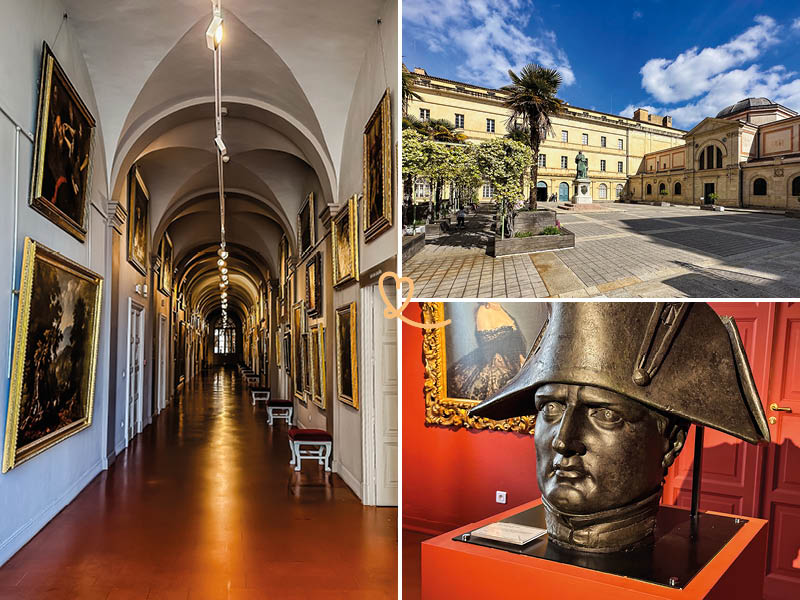
We highly recommend a visit to the Fesch Museum during your stay in Ajaccio. Commonly known as the Palais Fesch, it houses the Museum of Fine Arts . This cultural gem houses an impressive collection of Italian paintings, a selection ofCorsican works, and a department dedicated to Napoleon I. Seduced by the unique architecture of the site, we lost ourselves in the contemplation of canvases, sometimes dramatic, sometimes surprising.
In this article, you’ll find a selection of useful tips to help you prepare for your visit and have a great time.
This guide is completely independent, based on our experiences. We visited the region anonymously, making our own choices and paying our bills in full.
Why visit the Museum of Fine Arts in Ajaccio?
Is the Palais Fesch worth it? Our opinion:
That’s right, it’s featured in our article on must-do activities in Ajaccio! This museum houses a major collection of Italian paintings, among the most important in France. From primitive painters to the great masters of the Renaissance, you’ll travel through the centuries! Discover Corsican artists and the Napoleonic heritage in a sumptuous setting. We were won over by the way the paintings were hung, in the style of Italian palaces.

Why is the Museum Fesch famous?
Labelled a Musée de France, the Palais Fesch is renowned for its exceptional collection of Italian paintings dating from the 14th to 18th centuries. Contemplate the works of virtuosos, including Botticelli, Titian, Poussin and Veronese. We were also impressed by the Napoleon I department. It displays representations of the Bonaparte family in paintings, engravings, sculptures and various objects. During your visit, discover the Imperial Chapel in the south wing of the historic building. It houses the tombs of the emperor’s 2 parents and other close relatives. The north wing houses the Fesch Library.

Our favorite moments
During our visit, 3 moments particularly struck us:
- the painting Portrait de Napoléon 1e empereur des Français (1805) by Baron François Gérard,
- the painting La Pietra del Montigone (1854) by Ludwig Pietzch,
- the Imperial Chapel, with its stuccoed walls imitating marble.

WHERE TO STAY IN Ajaccio
In the city center:
Hotel San Carlu and its panoramic view – see photos and availability
On the western seafront:
Hôtel Les Mouettes and its very pleasant terrace – see photos and availability

Marina side:
Best Western Amirauté Hotel, very practical – see photos and availability
In Porticcio:
Suite Home Hotel near the beach – see photos and availability

See our list of the 12 best hotels in Ajaccio, with our reviews

History in brief
Napoleon I’s uncle, Cardinal Joseph Fesch, bequeathed 1,500 works of art to his native Ajaccio. His ambition was to create an Institute of Arts and Sciences. Discover the key dates in the palace’s history:
- 1828 to the Second Empire: construction of the monument,
- 1854: a statue of the cardinal is erected in the center of the courtyard,
- 1990: the museum occupies the entire building formerly shared with a college,
- 2010: reopening after a project to improve and conserve the collections.

Access: Palais Fesch, Ajaccio
Where is the Fine Arts Museum?
- In downtown Ajaccio,
- At 50-52 Rue du Cardinal Fesch,
- Close to the port and Maison Bonaparte.
OUR TIPS FOR RENTING A CAR IN Corsica
- Compare prices on our preferred platform: DiscoverCars – one of the best rated sites.
- Choose a car that is powerful enough (the roads are steep) but compact (some passages are narrow).
- Think of thecomplete insurance (some roads are tortuous and narrow).
- There is a lot of demand, book it early.
How to get there?
To reach the museum, you can choose between 3 options:
- on foot: stroll through the old town along Rue du Cardinal Fesch and you won’t miss the palace! It’s located in a very touristy alleyway, 5 minutes from Ajaccio Market and Tourist Office.
- by public transport: several bus stops are located on the T21 road near the museum, including lines L1, L2, L3, L4. Find out more here.
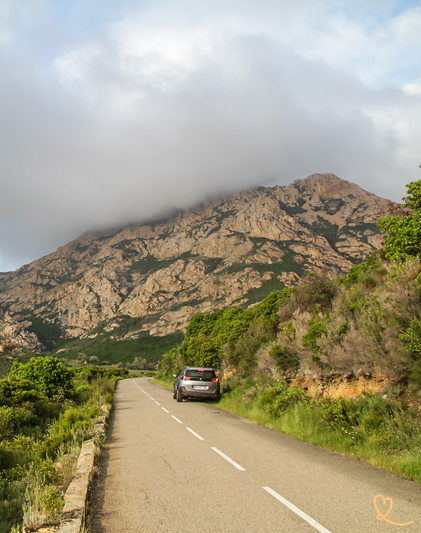
- by car: if you’re coming from the east, take the T21 to Ajaccio. On the other hand, if you’re coming from the west, take the D111 along the coast. The palace is close to the ferry port.

Parking
The museum has no parking facilities. We recommend parking at:
- Chamber of Commerce parking lot: 7-minute walk (fee payable),
- Q-Park Diamant parking lot: a 10-minute walk away (fee payable).

THINGS TO DO AROUND ajaccio
Discover all our articles on the region:
Useful tips: duration, schedules, eating…
Best time to visit
Preferably outside July, August and school vacations. This way, you can avoid peak periods. The Palais Fesch is one of the city’s star attractions, so it’s a popular tourist attraction. We suggest you come at the opening or at the end of the day. This will also allow you to escape the heat peak if you’ve come in the middle of summer.

Length of visit and main difficulties
Allow 1-2 hours to visit the Ajaccio Fine Arts Museum and the Chapelle Impériale.
The palace is accessible to people with reduced mobility. In addition to the elevator to access the various floors of the venue, it also provides wheelchairs and strollers for children on request in exchange for ID. Toilets are also available.

Advice on how to visit
The museum recommends the following chronological itinerary:
- 2nd floor: Italian paintings dating from the 14th to 17th centuries,
- 1st floor: Italian paintings from the 16th to 18th centuries,
- Ground floor: the Napoleonic department,
- Ground floor: Corsican paintings,
- Chapelle Impériale: the graves of the Bonaparte family.
You are of course free to follow your own path. Fans of the Corsican emperor will certainly prefer to start with the Napoleonic department. Let your desires and interests guide you!

USE OUR GUIDE TO PLAN A
DREAM TRIP TO Corsica
All the information you need for your trip:
- 7 maps that make planning easier
- 130+ pre-selected locations
- Practical advice
- + 220 photos to help you choose
Visiting with children
The palace regularly organizes workshops and storytelling tours for different age groups: 3 to 5, 6 to 9 and 10 to 13. Check the latest program on the museum’s official website here.

Schedules and rates
Schedules:
- From November 1 to April 30, the museum is open daily from 9am to 5pm,
- From May 1 to October 31, the museum is open daily from 9:15 am to 6 pm,
- Closed from January 1 to 16, Christmas and New Year’s Day.
Rates:
- Adult ticket: €8,
- Reduced rate: €5 (students and over-65s).
A visit to the Chapelle Impériale is included in the price of a ticket for the Palais Fesch, but is only open during the summer season.
Guided tours
Every Friday at 2.30pm, the museum organizes guided tours of the masterpieces in the Palais Fesch. Find out more here.
Alternatively, download the museum app:

Catering
Located in Ajaccio’s city center, the palace is close to many fine restaurants. Discover our selection of good restaurants:
- Restaurant Le Petit Restaurant
On the corner of a cobbled street in the old town, this address offers a cuisine that favors short circuits and highlights local producers. We were seduced by the chef’s fine, tasty dishes. - Restaurant Marinette
Just a few meters from Ajaccio’s Citadel, this establishment focuses on quality and fresh produce. The cuisine is refined and tasty. The quantities are just right and the cooking is light. - Restaurant L’Écrin
Located close to Place d’Austerlitz, refinement is the watchword here. Fish, meat, vegetables and fruit are transformed into tasty dishes!
For more choice, see our article on the city’s best restaurants.

A painting trip to Italy
Spread over 2 floors, the Fesch collection offers an exceptional panorama of Italian painting over a long period, from the 14th to the 18th century. From the Primitives to the painters of the Renaissance, Baroque and Caravaggio, immerse yourself in the pictorial currents that have shaped the history of art! We discovered masterpieces by great masters such as Titian, Botticelli, Baciccio, Veronese and Poussin.
The Italian Primitives
Following the museum’s itinerary, we went straight up to the 2nd floor, where the oldest paintings are on display. They date from the 14th to 17th centuries. In this way, we’ve maintained a certain chronological coherence as we’ve progressed through the palace.

On this floor, the exhibition space is divided into several rooms of varying sizes dedicated to primitive, Renaissance, Venetian, Florentine and Caravaggesque paintings, among others. In the center, a main aisle, richly decorated with still lifes, leads from one room to the next. At the end of the long corridor is the Grande Galerie. We are particularly interested in the masterpieces of the Italian Primitives.

Find out in a few lines what we have learned about primitive painting. Around 1300, Italian artists initiated a significant change in religious painting. They began to depict sacred figures in a more human way, placing them in earthly rather than celestial settings. This artistic evolution, reflecting a new approach to religion, heralded the arrival of the Renaissance. Take a look at the chart above, which illustrates this point. The Virgin Mary and her newborn baby have human features, as do the angels surrounding them.

As we continued our visit, our attention was drawn to this multiple work in golden hues. A veritable propaganda tool in the service of the faith, this polyptych was intended to guide lost souls to the right path. On the 1st level, we’ve identified Saints, while the 2nd represents Apostles. Let’s continue our exploration of the 2 floors devoted to Italian painting. Do you know who the great masters exhibited at the museum are?
The great Italian masters
Renowned for its exceptional collection of Italian canvases, the Palais Fesch is home to works by great painters such as..:
- Virgin and Child supported by an angel under a garland (15th century) by Sandro Botticelli,
- Portrait of a man, known as the Man with a Glove (16th century) by Titian,
- Midas at the source of the Pactolus (17th century) by Nicolas Poussin,
- Leda and the Swan (16th century) by Paul Veronese.
Do you know which of these 4 paintings caught our eye the most? You’ll find a clue in our photo below!

Well spotted, this is indeed the painting Leda and the Swan by Paolo Caliari, known as Paul Veronese. Do you understand what it represents? It took us several minutes to grasp the scene and its significance, and above all to grasp where our unease was coming from. In the intimacy of this bedroom, the young woman and the bird are in love. Viewers are thus positioned as voyeurs. We encourage you to learn more about the history of this work through a museum video available here.

The continence of Scipio, Il Baciccio
Continuing our wanderings on this floor, we also discovered paintings by Giovanni Battista Gaulli, known as Il Baciccio, one of the greatest decorators of Baroque Rome. Interested in the painting Scipio’s Continence, we took the time to contemplate every detail. This historical episode was widely covered during the Renaissance and Baroque periods.
The canvas that stands out from the rest
Before descending to the lower level to discover the Napoleon collection, we wanted to highlight a painting that piqued our curiosity. Entitled The Temptation of the Owl, it was created by an unknown painter nicknamed the Master of Egg Fertility. It dates from the late 17th century. As much for its title as for what it represents, this work really took us by surprise! It stands in stark contrast to the other paintings on display.

As we got closer, we were able to observe the details of this intriguing scene. Humanized animals seem intent on seducing the owl by offering it food and drink. They themselves are shackled by ropes held by other animals. Although historians struggle to give a clear interpretation of this work, they are inclined to believe it is a satire of society, a reference to Freemasonry, or a parody of Leonardo da Vinci’s The Last Supper . How do you interpret this unique painting?

Napoleon and his family told through art
Head down one floor to the Napoleonic department, with its red-painted walls! Immerse yourself in the history of the French Emperor through works of art and everyday objects. We learned more about some members of the imperial family. Part of this level is reserved for temporary exhibitions.
Royal family paintings
We walked through the 3 successive exhibition spaces: the Salle Fesch, the Salle Survillers and the Salle Second Empire. During our visit, we were struck by the painting you can see below. Do you recognize this famous painting? Featured in the history textbooks of French schoolchildren, it represents Napoleon in all his imperial grandeur. He adopts the pose of French king Louis XIV, erect and proud.

In this setting of velvet and drapery, he is surrounded by the regalia, a set of objects emblematic of royal power. Do you know what the white fur that cascades to the emperor’s feet is made of? The coronation coat is lined with ermine. This is the prerogative of the kings of France. Certain memories from our history classes came to the surface to help us better interpret the work and its subtleties.

An oil on canvas caught our eye in one of the rooms of the Napoleonic department. Dominated by darkness, this painting illustrates a family outing to the skating rink. The artist has succeeded in creating a very special atmosphere, based on the play of light and contrasts. The flaming torches and lanterns carried by the court, surrounding members of the imperial family, illuminate the picture.

Miscellaneous items
The Fesch Museum houses an interesting collection of Napoleonic objects, testifying to the historical importance of the Bonaparte family. Among the exhibits are delicate bronze statuettes of Napoleon and his family, and medals and medallions bearing their effigies. True period treasures, these everyday objects provide a fascinating insight into the Napoleonic cult. This gave us a better understanding of the impact of the imperial family on French culture.

We even discovered a toiletry kit from another era. It belonged to Napoleon’s youngest brother, the King of Westphalia. This precious set includes a series of small, richly decorated objects, notably a pair of scissors and a glass flask. The box itself is topped by a mirror and closes with a key. It testifies to a luxurious lifestyle reserved for royalty at the time. Imagine the daily life of a member of the imperial family, and extend this experience with a visit to the Maison Bonaparte!

The bust gallery
The Galerie des bustes links all the exhibition rooms on this floor. As its name suggests, it houses a collection of sculptures displayed on either side of the room. Among them, the busts of Elisa Bonaparte’s family members are notable works designed by sculptor Lorenzo Bartolini. He created the official effigy of the Grand Duchess of Tuscany, her husband and their daughter Elisa Napoleone. We admired sculpted faces with very different features, ranging from a 3-year-old child to a sovereign woman.

Before descending to the ground floor to discover the Corsican painters, we took a last look at the bust of Napoleon. Created by Antoine-Denis Chaudet, the face of the 1st Emperor of the French is proud and unwavering. This marble sculpture seems to have lost none of its beauty over time. The lights redefine the young man’s features and underline the artist’s finesse. The shadows accentuate the dimple in the chin and the determination of the eyes, recalling Napoleon’s power and authority.

A beautiful end to the visit
To round off your visit in style, head for the lower floor, where Corsican paintings are on display. During the summer months, the Imperial Chapel is also open to the public. If you get the chance, we strongly recommend that you discover it. Located in the north wing of the palace, the Bibliothèque Fesch is also worth a visit if it’s open.
Corsican paintings
The Museum Fesch has a department dedicated to Corsican painters. Painted a fairly dark green, the rooms highlight the works on display and their natural hues. Here, you’ll be able to contemplate magnificent island landscapes, such as this painting of Bastia’s old port. The fruit of an effort to promote the region’s artistic heritage, this collection reveals the richness and diversity of Corsican pictorial creation over the generations. We particularly appreciated this painting by Léon-Charles Canniccioni, who sought to immortalize the daily life of the inhabitants of the period.

Purchased by the museum, some of the works collected are by European artists. Such is the case with this superb painting by German artist Ludwig Pietzch. We were irresistibly drawn to its vibrant hues and fairytale atmosphere. The author has captured the essence of Corsica’s mountains. Get up close to the painting to discover the herd of goats and the characters that bring this grandiose landscape to life! For more information, watch the full video on the board here, available in French and Corsican.

The Imperial Chapel
You’ve completed the tour of the Musée des Beaux-Arts d’Ajaccio, but you still have the 2 wings of the palace to explore. If you visit between May and October, you’ll discover the interior of this splendid religious building, whose walls are adorned with stucco imitating marble. The view of the nave and choir totally charmed us. From floor to ceiling, this listed monument impressed us with its many small details.

Then go down to the crypt. It houses the tombs of members of the Bonaparte family and Cardinal Fesch. Built between 1857 and 1859, this space was erected on the orders of Napoleon III. In particular, we saw the tombs of Charles and Laetitia Bonaparte, the 2 parents of France’s 1st emperor.

The Fesch Library
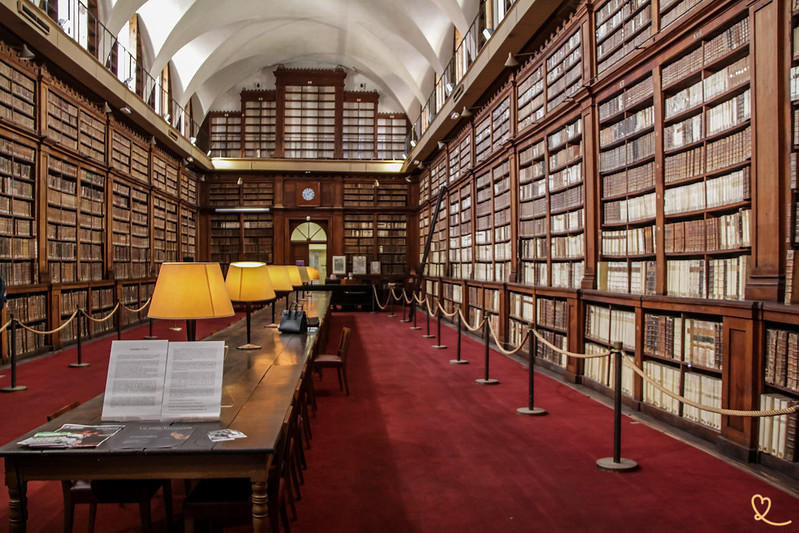
Located in the north wing of the palace, the Bibliothèque Fesch is not always open to the public due to renovation work. It owes its renown to its heritage room, which houses an extraordinary collection of old books. Over 20,000! Among these priceless treasures are books from the 15th century and encyclopedias that have left their mark on history. The shelves transported us to another era. Spreading out towards the top of the room, they make you want to get lost. Let the nobility of the place soak you in!
Subscribe to our Newsletter
- Get away from it all with Region Lovers’ beautiful destinations!
- Once a month
- Advertising-free
Frequently asked questions
Does the Palais Fesch have a souvenir store?
The Museum of Fine Arts is home to a souvenir store where you can find small objects and clothing flocked with Napoleon’s effigy. It also offers books, tote bags and cards on the works exhibited at the palace. It’s the perfect opportunity to bring home a gift to remind you of your trip!

Where is the Salon Napoléonien in Ajaccio?
The Napoleonic Salon is located in the Town Hall. It houses portraits and busts of the imperial family. Unfortunately, it is rarely open to the public. We were unable to access it during our stay. Find out more on Ajaccio’s official website here.

PLAN YOUR TRIP TO Corsica
Inspiration destinations

Best of
- The most beautiful beaches of Corsica
- The most beautiful villages of Corsica
- The most beautiful cities of Corsica
- The most beautiful destinations in Corsica
- The museums of Corsica
- Hidden gems in Corsica
- The most beautiful natural pools
- What to do in North Corsica
- Best things to do in South Corsica
- Canyoning in Corsica
Where to stay